
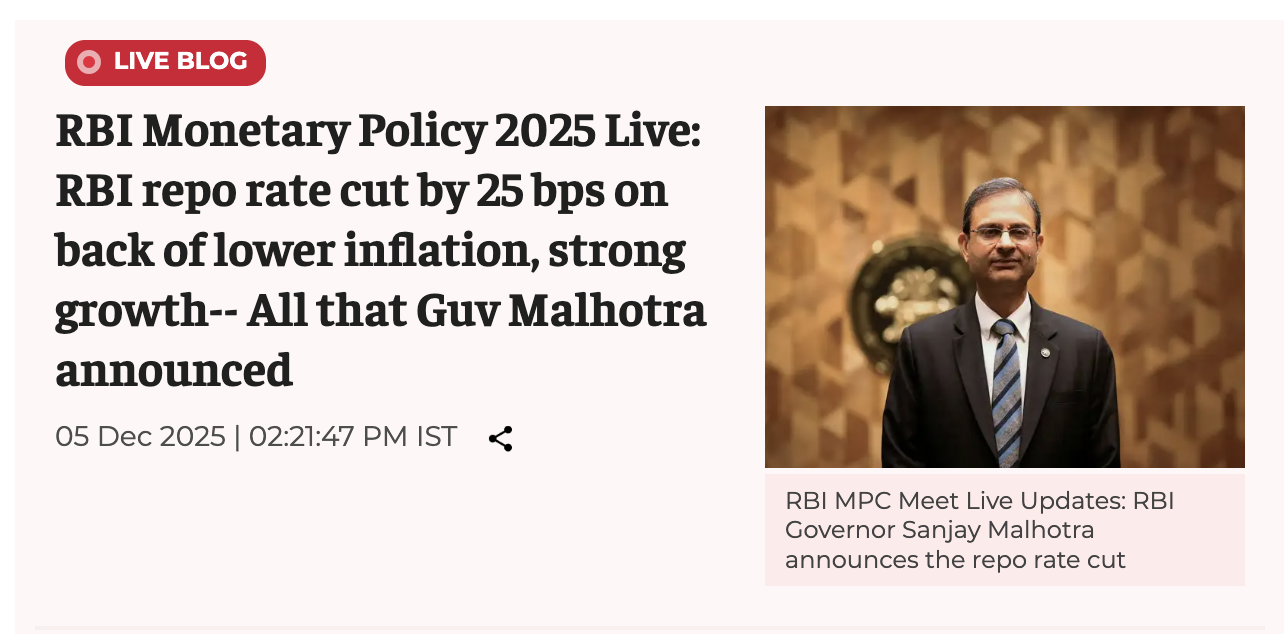
How RBI’s 25 BPS Rate Cut Will Shape India’s Real Estate Market in 2026 — A Strategic View for Developers
The Reserve Bank of India’s recent 25 basis point rate cut — bringing the repo rate down to 5.25% — may look like just another policy announcement. But for India’s real estate market, this move marks a psychological and economic turning point.
After four consecutive rate cuts this year and a cumulative reduction of 125 bps, the industry finally has the one thing it has been waiting for: momentum.
As a Strategic & Growth Consultant working closely with residential developers across Pune, Mumbai, and tier-2 cities, I see this decision having very real, on-ground impact — on buyers, developers, and the overall direction of the market.
Let’s break down what this truly means.
1. Homebuyers Finally Feel They Can Say “Yes”
Interest rates don’t just move numbers. They move emotion.
A 25 bps cut may seem small, but the effect on home loan affordability is significant.
For example, on a ₹75 lakh home loan over 20 years, the EMI drops by nearly ₹6,000 per month — translating into ₹15 lakh saved over the entire tenure.
That’s not a financial decision alone.
That’s a young couple saying:
“Maybe we can buy the home we’ve been dreaming about.”
Bank rates are already dropping to the 7.3%–7.5% range, approaching the historic lows of the post-COVID period. This makes 2026 an unusually strong year for end-user demand.
2. Affordable & Mid-Income Housing Get the Biggest Push
These segments felt the most pressure in 2025:
- Prices rose nearly 10% across major cities.
- Sales slowed down by ~8–9%.
- Buyers hesitated due to affordability concerns.
This rate cut directly addresses that hesitation.
For developers in these segments, this is an opportunity to regain lost velocity — if they act quickly with the right pricing, positioning, and funnel strategy.
3. Tier-2 and Tier-3 Cities Will Move Faster
Unlike metros, where decisions depend on multiple variables, smaller cities respond faster to changes in affordability.
A ₹5,000–8,000 EMI drop can be the difference between:
- “We’ll wait another year.”
- “Let’s book the site visit.”
Expect stronger traction in cities like Nagpur, Indore, Nashik, Kolhapur, Surat, and Lucknow.
4. Developers Benefit — But Need to Navigate Challenges
The good news:
- Lower borrowing costs
- Faster execution cycles
- Better financing conditions
- More confident buyers
But this is only half the picture.
Developers still face:
- Rising construction costs (up ~40% since 2021)
- Rupee depreciation increasing material costs
- Tight margins in affordable housing
- Increased expectations for faster delivery
The winners in 2026 will be developers who pair this lower rate environment with strategic efficiency — optimised planning, value engineering, and stronger digital sales systems.
5. Market Sentiment Is Finally Turning
The combination of:
- festive season momentum
- income tax relief
- GST rationalisation
- and now, this rate cut
…creates a powerful boost to buyer confidence. When sentiment turns, conversion rates improve almost instantly. Early indicators already show higher enquiry-to-site-visit conversions across multiple markets.
Expect this momentum to carry into Q1 and Q2 of 2026.
6. Liquidity Measures Add Fuel to the Fire
In addition to the rate cut, RBI has:
- Injected ₹1 lakh crore through OMO purchases
- Announced a 3-year USD/INR buy-sell swap of $5 billion
This ensures better liquidity in the banking system.
Simply put: Easier credit, more stability, faster approvals.
Developers planning launches in the next 3–9 months should benefit from smoother financing channels.
The Strategic Outlook for 2026
The Indian real estate market enters 2026 with a unique combination of:
- stronger GDP projections
- controlled inflation
- improved affordability
- rising end-user demand
- supportive monetary environment
However, supply-side pressure — especially rising construction costs — remains the key constraint. Developers who innovate around costing, phasing, and product design will unlock the maximum upside.
What Developers Should Do Now
Here’s what I’m advising developers across markets:
1. Strengthen your digital lead systems
The wave is coming — don’t let leads slip through poor follow-up.
2026 will reward organized funnels, not random lead lists.
2. Recalibrate your pricing
With EMI relief, price psychology shifts.
Test your pricing with precision.
3. Accelerate execution where possible
Lower financing costs mean a better cost-to-delivery ratio.
4. Position your product around value, not price
Buyers don’t want “cheaper homes.”
They want better reasons to buy.
5. Double down on mid-income inventory
This segment will move the fastest.
Final Word
This rate cut won’t fix everything overnight — but it gives the real estate sector what it has needed for months: momentum, confidence, and a fresh runway for growth.
The next 6–12 months will separate developers who react from developers who strategize.
If you want help aligning your launch, pricing, and digital sales strategy with this new market environment, Digital Krushna can support you with:
- High-conversion digital funnels
- Real estate lead generation systems
- Strategic launch consulting
- Sales process optimisation
Let’s build smarter, not just faster.
Reach out to discuss your 2026 strategy.